


How strong is a 3D-printed part? The press test: solid wood versus UL-LFAM
In the Breaking Rules video we put a solid wood beam and a sandwich panel printed with the UL-LFAM method under a hydraulic press: the wood snaps at 1.5 tonnes, the printed panel takes 2 tonnes and springs back.
“Yes, but what material do you use? How strong is it?” These are the two questions shipyards ask us most often, and the second deserves an answer you can watch. So we filmed Breaking Rules: two minutes under a hydraulic press, same punch, same span between the supports and a tonnage counter on screen. On one side a solid wood beam, the structural material everyone knows. On the other a sandwich panel printed with our UL-LFAM method.
Round one: solid wood
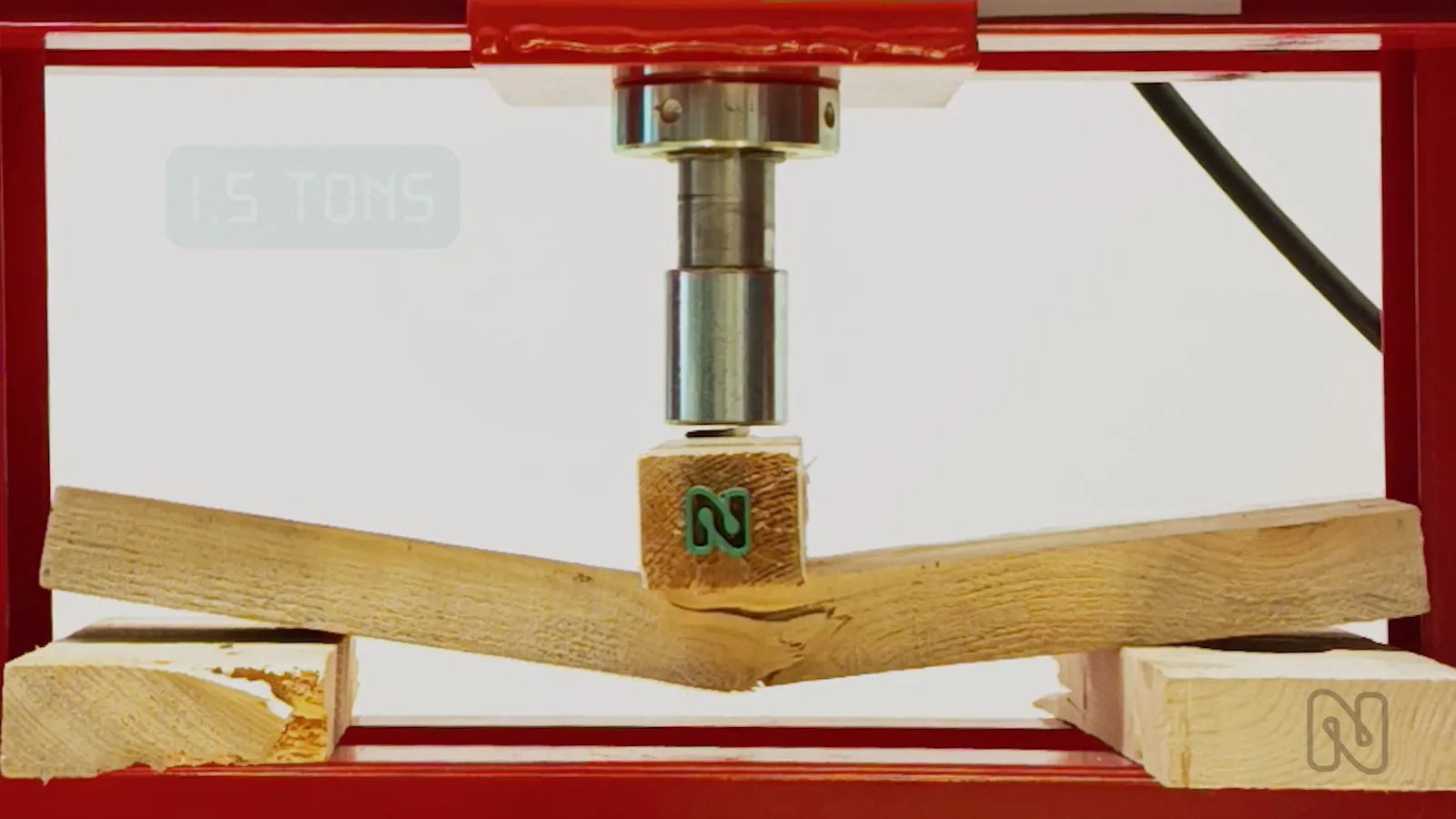
The wooden beam bends steadily up to about 1.3 tonnes. At 1.5 tonnes it gives: you hear the crack, the fibres open and the beam stays bent. This is the typical failure of wood, brittle and final: once the limit is passed, the part does not come back.
Round two: the 3D-printed panel
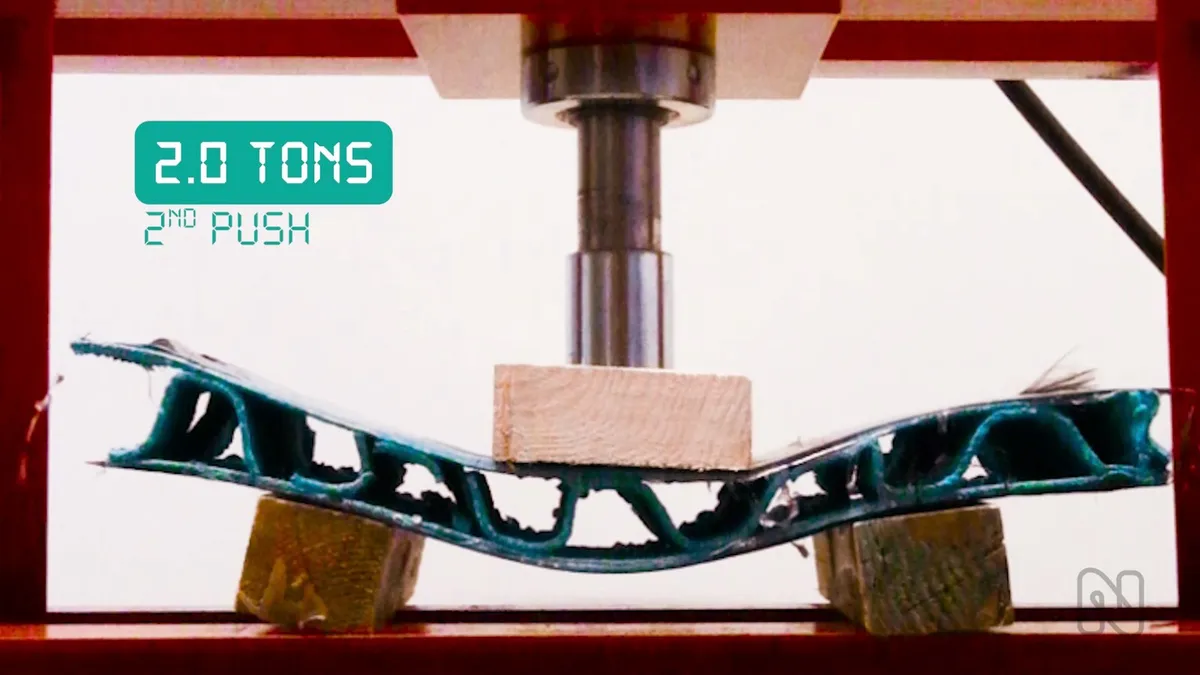
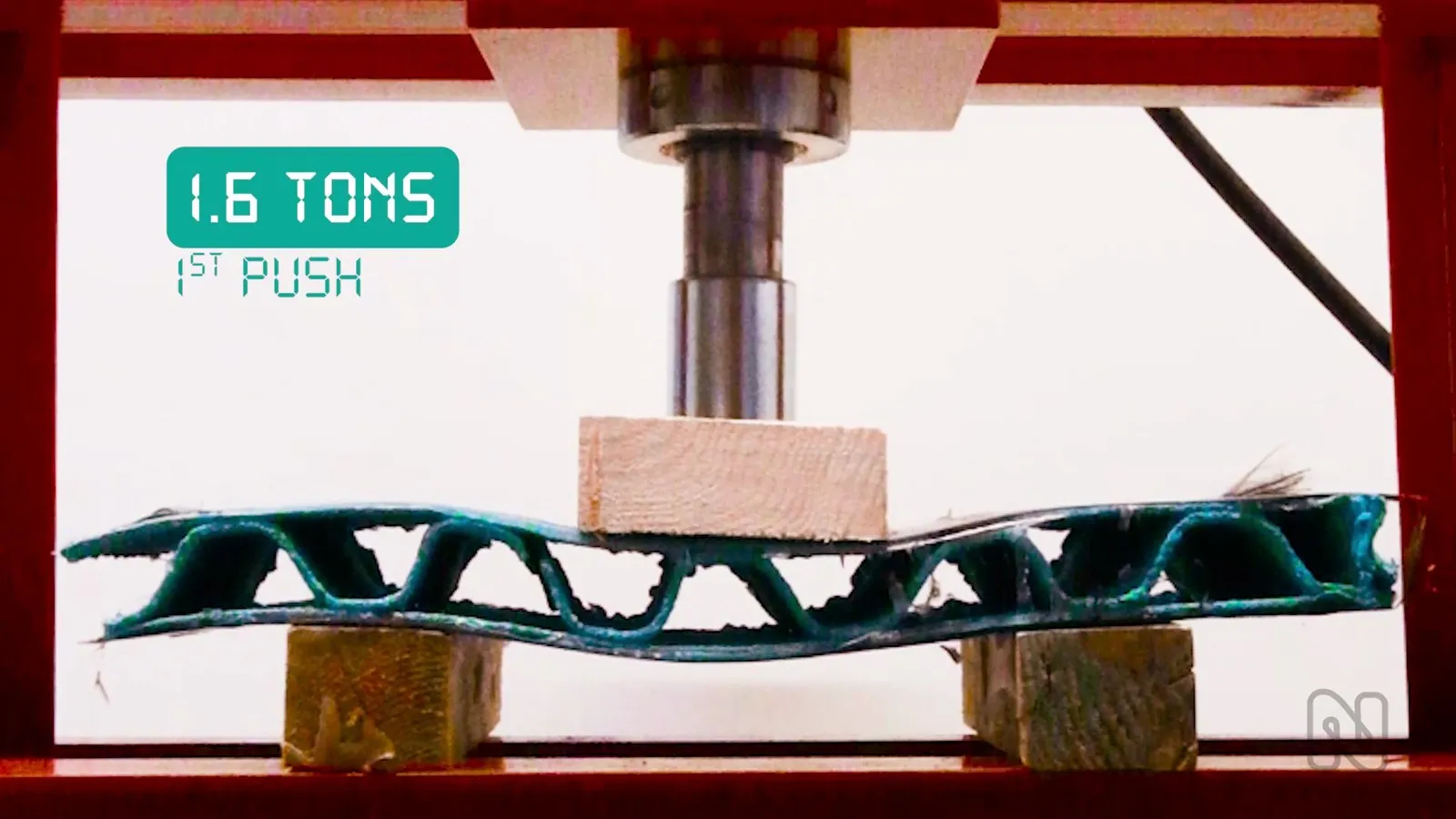
The NUGAE panel is a sandwich: a printed core with hollow ribs only a few millimetres thick, laminated with fibre skins. Under the same punch it bends far more than the wood, but it does not break: at 1.6 tonnes the first push stops and the panel springs back. Second push, same part: 0.3, 0.9, 1.4 and finally 2 tonnes, with the same elastic response.
What this test really says
It is a demonstration, not a laboratory test: its purpose is to make a difference in behaviour visible, not to certify a value. The correct reading has two parts.
- Performance comparable to a classic sandwich composite. A 3D-printed core, once laminated, works the way the balsa or foam panels shipyards have used for decades work. The numbers measured in the lab, with standard specimens and a direct comparison against a balsa sandwich, are in the study published with Politecnico di Milano: same stiffness, about 10% less weight.
- A far more resilient response under stress. Where wood snaps, the ribbed core deforms and recovers. For a part that lives on board, among knocks, vibration and repeated loads, damage tolerance matters as much as peak strength.
Why it matters for boatbuilding
For years large-format 3D printing was associated with heavy, brittle parts, good for prototypes. NUGAE’s patented printed core was designed to do the opposite: light, stiff, robust shells and structures meant to be laminated and installed on real boats. The stern hatch for a 13-metre sailing yacht, the replacement keel for a catamaran and the structural seat presented at JEC World 2026 are the same idea as the video, at full scale.
If you have a component to make lighter without giving up robustness, tell us about it: the best way to answer “how strong is it?” is to try it on your part.
Video
Sources
Related case studies
)
)
)
Have a component to make lighter, faster or without a mould?
Challenge us