


10 questions for... Andrea Ratti
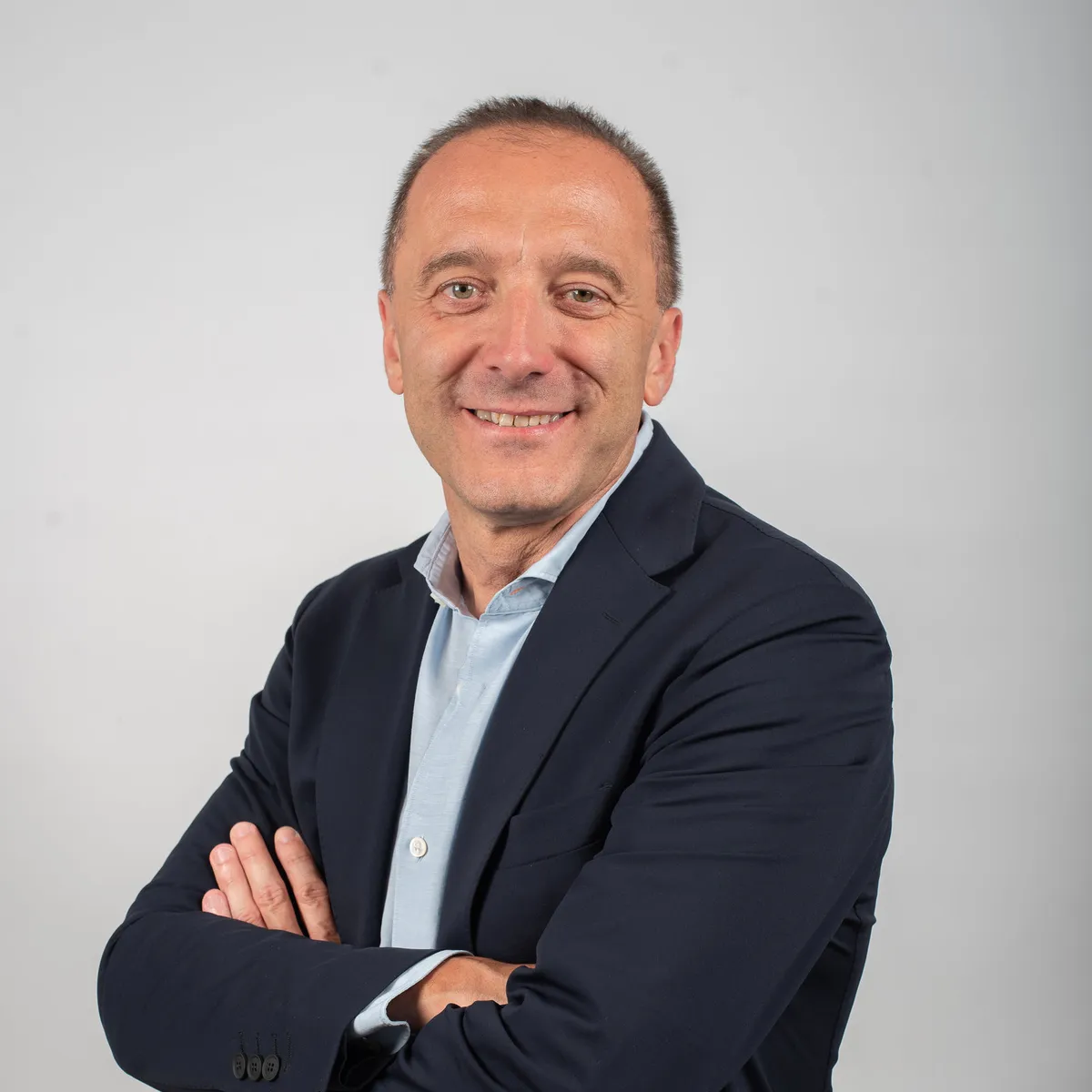
Associate Professor at the Design Department of Politecnico di Milano, he has worked on yachts and advanced composites for more than thirty years. He answered our ten questions: the NEMO project, the permanence of technique and his next motorbike, 3D printed.
The interview was given in Italian; this is our translation.
1. Who are you and what do you do? Introduce yourself in two lines.
Andrea Ratti, Associate Professor at the Design Department of Politecnico di Milano. I have been teaching and doing research on yachts and advanced composites for more than 30 years.
2. What is your relationship with the things that are designed and built?
To know how to design you need to know how to build, which does not simply mean knowing the construction technique in question, but being able to do it in practice. Hands are the best tool for thinking, for understanding and therefore for innovating.
3. How did you meet NUGAE?
I have known the co-founders of NUGAE since before the company was founded. I know them well, so I have been keeping an eye on what they do since they were little.
4. What did you think the first time you saw a 3D printed part of that size?
At last someone who has understood the meaning of what Guido Nardi wrote about the “permanence of technique”*, has treasured it and has gone beyond it.
* Guido Nardi, architect and professor of Architectural Technology at Politecnico di Milano, described how construction techniques tend to persist even when new materials and tools would make a different way of designing and building possible.
5. What was your project, or your encounter, with NUGAE? Tell it as you would tell a friend.
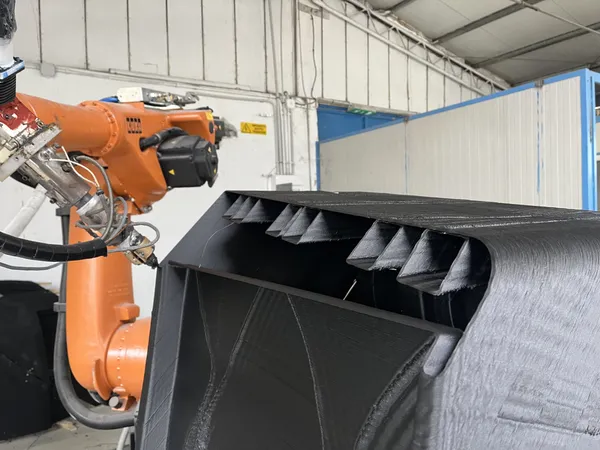
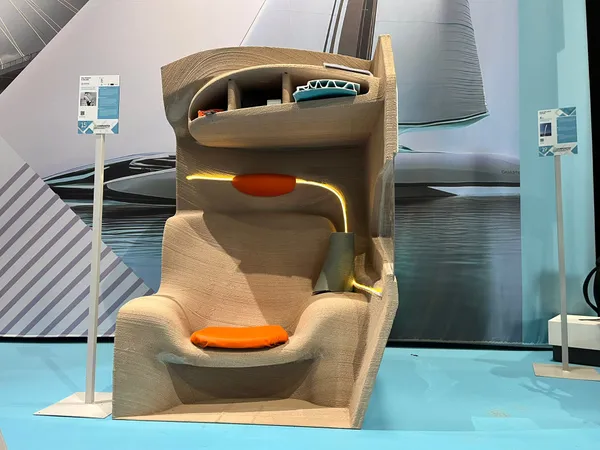
I would tell the latest one. It was developed within the PNRR programme (the NEMO project, presented at the 2024 Genoa International Boat Show), in which, with the support of NUGAE, we managed to explain to the yachting world that new production techniques do not only open up the opportunity to make composite parts that perform well, are light and come with predictable costs and lead times. Above all, they point to new scenarios and new ways of approaching design, which will make possible, and at the same time give rise to, new ways of using the living spaces on board.
6. What surprised you most?
Achieving the results while overcoming the unexpected with ease and intelligence.
7. What did you expect that did not happen, or what did you not expect that did?
Given the results achieved, I would have expected a more responsive attention from the market and from industry, while I did not expect such a significant level of interest from outside the sector.
8. If you had to explain to a child why this technology is different, what would you say?
Usually, when you think of making something, you separate a first moment of ideas from a later reflection on feasibility and on the technique that will allow you to make it. With this technology you know from the start that you will be able to make it, so you think more freely, without constraints of shape, technology or function…
9. What would you like to see 3D printed tomorrow?
My next motorbike.
10. Complete the sentence: “I chose NUGAE because…”
Because they have found a perfect balance between creativity, expertise and madness.
Together with Francesco Belvisi of NUGAE and Massimo Piccioni, Andrea Ratti is an author of the study on 3D printed composite panels published in the Journal of Marine Science and Engineering. The other research is on the Research and publications page.
Video
Sources
Related case studies
Have a component to make lighter, faster or without a mould?
Challenge us