


From 10-15 to 2-4 kg/m²: Francesco Belvisi tells 3Druck.com why lightness makes large one-off parts pay off
3Druck.com, the German additive manufacturing magazine, interviewed our co-founder and CTO Francesco Belvisi about the UL-LFAM ecosystem: robots, patented extruder, NU-Slice and CoreLight3D®. Published on 25 September 2026 in German, English and Italian.
In large-format 3D printing there is one number that decides almost everything: how many kilos a square metre of printed part weighs. On 25 September 2026 3Druck.com, one of the leading additive manufacturing publications in the German-speaking world, published an interview with Francesco Belvisi, co-founder and CTO of NUGAE, built around exactly that number. The piece came out in three editions (German, English and Italian) and it is the most complete account of our approach that a trade magazine has published so far.
Where it started: the shipyard
NUGAE was not born in a 3D printing lab but in boatbuilding. There the problem is always the same: large parts, often one-offs or tiny batches, which today need a plug, a mould and weeks of work before production even starts. For a part you make only once, the mould is a cost that never pays back.
3D printing removes the mould, but conventional large-format printing has another limit: it prints solid, so the part ends up heavy and slow to make. That is where lightness comes in.
2-4 kg/m² instead of 10-15
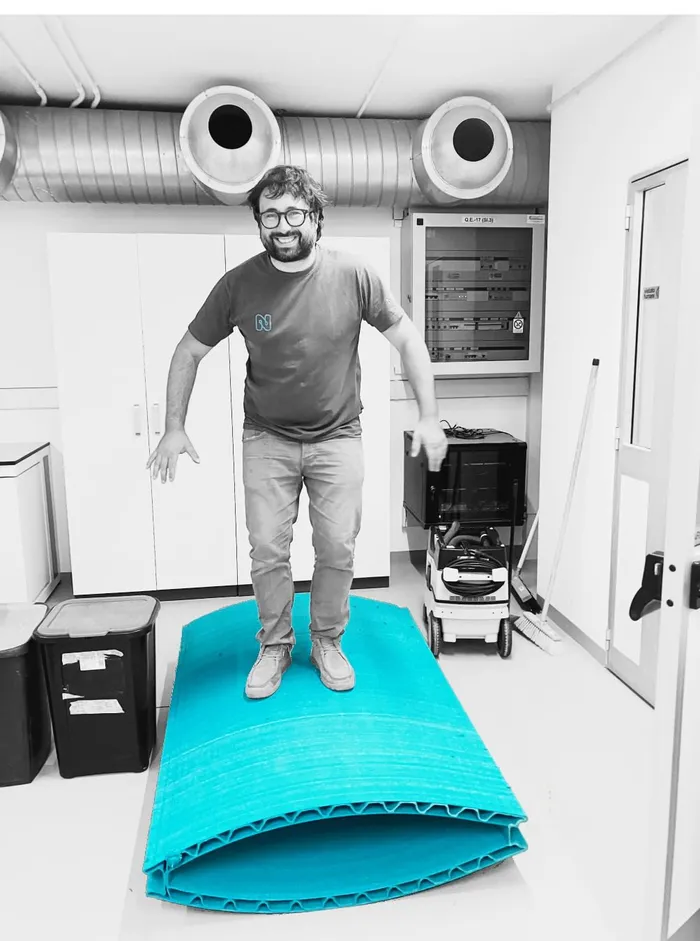
In the interview Belvisi explains the core of the UL-LFAM method (Ultra-Light Large Format Additive Manufacturing): thin walls organised in hollow ribs, which get their stiffness from geometry rather than from the amount of material. The result is parts weighing 2-4 kg/m², where typical large-format printing sits between 10 and 15 kg/m².
Less material means fewer machine hours, less energy, and parts that are easier to handle and to work after printing. Above all, it means that a one-off part, with no mould and no plug, starts to make economic sense.
An ecosystem, not a machine
The second message of the interview is that the result does not come from a single component but from four elements developed together:
- hardware: six-axis industrial robots and a patented pellet extruder with a coaxial hopper;
- software: NU-Slice, our slicer, which generates toolpaths for thin, ribbed structures;
- material: CoreLight3D®, polypropylene-based with a variable share of post-industrial recycled content, up to 70%;
- process: the way the printed part is then laminated, finished and integrated into the final product.
From boats to museums
The typical case discussed is the yacht hard top, where weight above the waterline matters more than anywhere else. Belvisi also talks about a 3D printed 43-foot catamaran, now under construction, parts of which we have already shown.
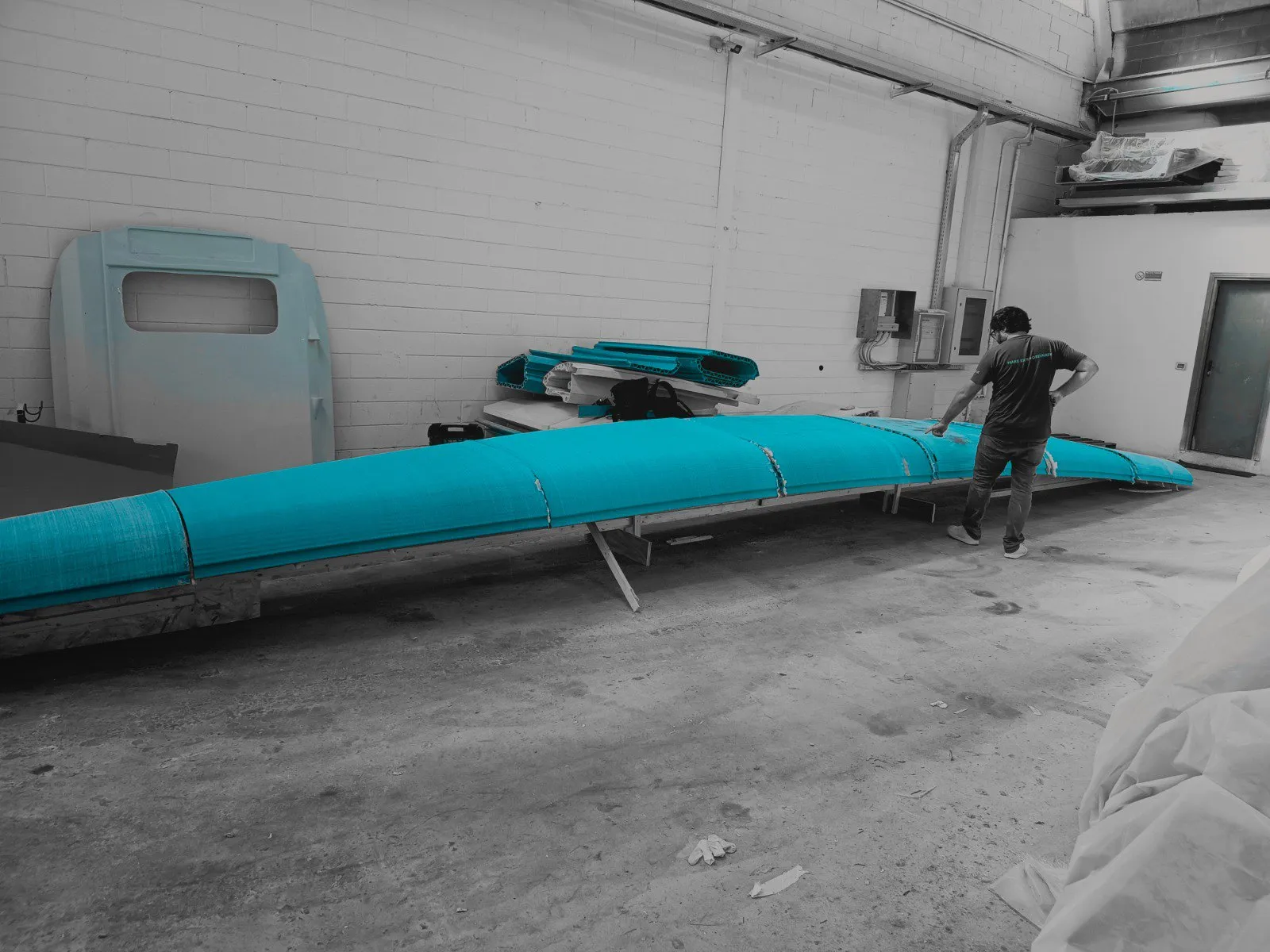
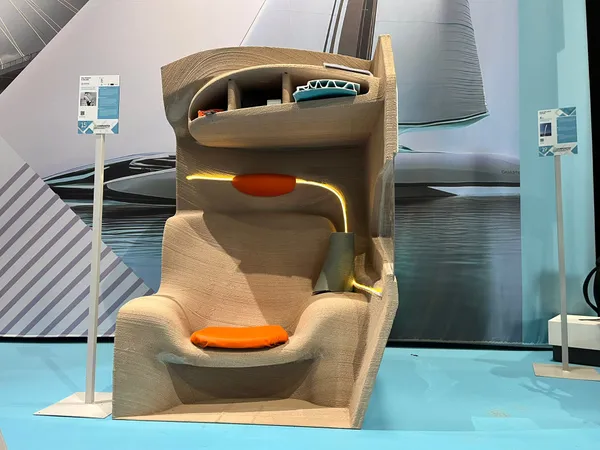
But the interview keeps coming back to one point: the same method works wherever a large, light object is needed. The living module of about 70 kg that took an Ape to the North Cape and back; the roughly 8 kg structure of the artwork Heaven + Earth for the Castelbuono Civic Museum; the sea creatures of the Garibaldi Urban Orchestra in Naples.
Making parts where they are needed
The last part of the interview looks ahead. A large-format component is big, light and delicate: shipping it costs money, sometimes more than making it. That is why our idea is to bring the technology close to where parts are used, through decentralised production units. Belvisi presents the two forms this idea has taken: NU-Hub, the cell permanently installed in a shipyard or factory, and NU-Mobile, the same technology on the move, arriving for a test, a demo or a production slot and then leaving again.
Why it matters to us
An interview is not an award. But when a foreign technical magazine reconstructs material, machine, software and applications in full, it means the message has landed: we do not sell a printer, we offer a different way of building large objects. Our thanks to the 3Druck.com editorial team for the space and for the care taken over all three editions.
All three versions of the article are listed in the sources below. The most common questions on materials, strength and finishing are answered in our FAQ; if you have a large part that needs a mould today, get in touch. Think big. Stay light.
Sources
- 3Druck.com: Interview with Francesco Belvisi of NUGAE: Lightweight Construction Makes 3D Printing of Large-Format One-Off Parts Economically Viable (25 September 2026)
- 3Druck.com (original German edition): Interview mit Francesco Belvisi von NUGAE (25 September 2026)
- 3Druck.com (Italian edition): Intervista a Francesco Belvisi di NUGAE (25 September 2026)
Related case studies


Have a component to make lighter, faster or without a mould?
Challenge us